
4. March 2026
Milestones for a future worth living
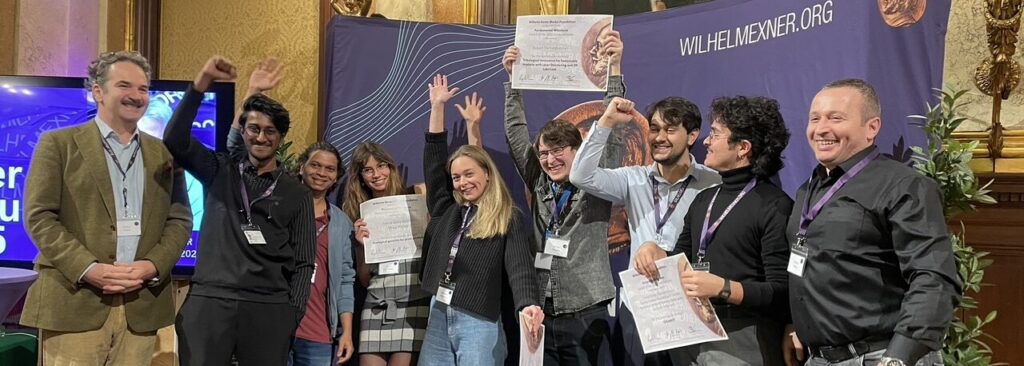
This year’s poster session was once again held as part of the Exner Lectures in honor of Sepp Hochreiter. Under the theme “Milestones for a future worth living”, researchers from academia and industry were invited to present their visions in the form of posters. Among the many impressive submissions, four posters stood out in particular:
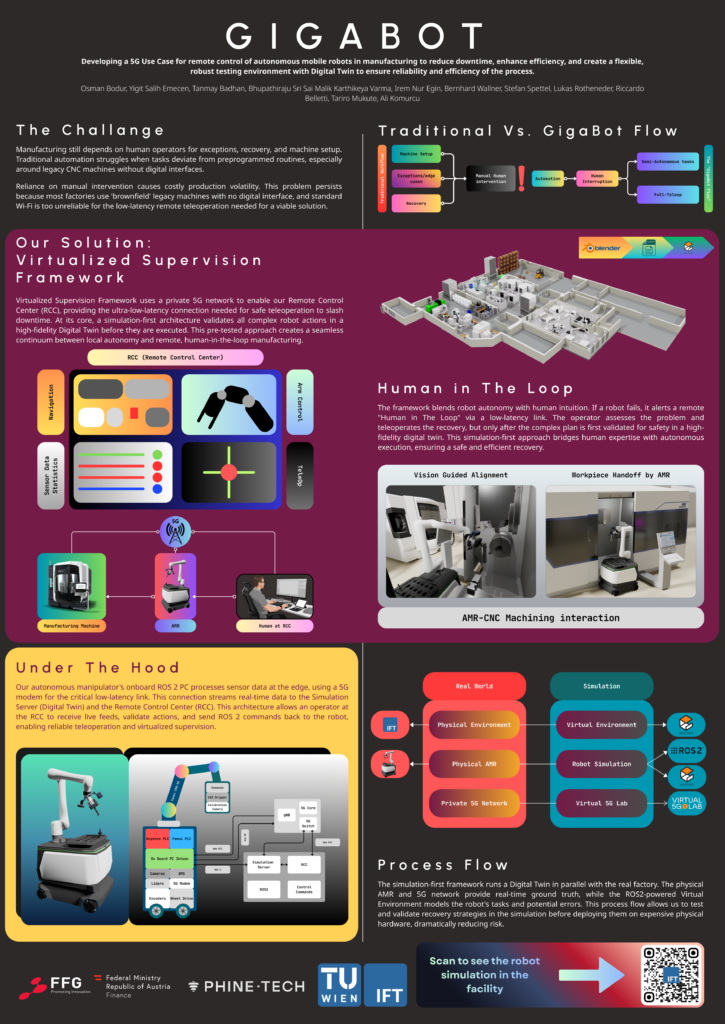
GIGABOT (surprising milestone award)
GIGABOT is a project that explores how mobile robots can be safely and efficiently used in brownfield factories – older factories where full automation isn’t practical. Many factories still need people on-site for troubleshooting or maintenance, even with automated machines.
GIGABOT’s approach combines mobile robots, a private 5G network, a digital twin (a virtual copy of the factory that mirrors real-world conditions), and a remote control center. Following a “human-in-the-loop” approach, the robots handle routine tasks on their own, but humans can take over remotely when complex or critical situations arise. Fast, reliable 5G communication ensures smooth remote control, real-time video, and secure data sharing.
Before real-world testing, all processes and controls are first developed and tested in a simulated environment and the digital twin. This helps validate procedures, assess risks, and refine interfaces. Currently, the project is focused on building and testing the remote control system, the digital twin, and the 5G network in a lab. GIGABOT supports the idea of “Dark Factories” – factories that operate with minimal on-site staff but still rely on human oversight when needed.
Behind the project is a whole team of researchers from the Institute of Production Engineering and Photonic Technologies at the Technical University of Vienna:
Osman Bodur, Yigit Salih Emecen, Tanmay Badhan, Karthikeya Varma, Irem Egin, Bernhard Wallner, Stefan Spettel, Lukas Rotheneder, Riccardo Belletti, Tariro Mukute & Ali Kömürcü
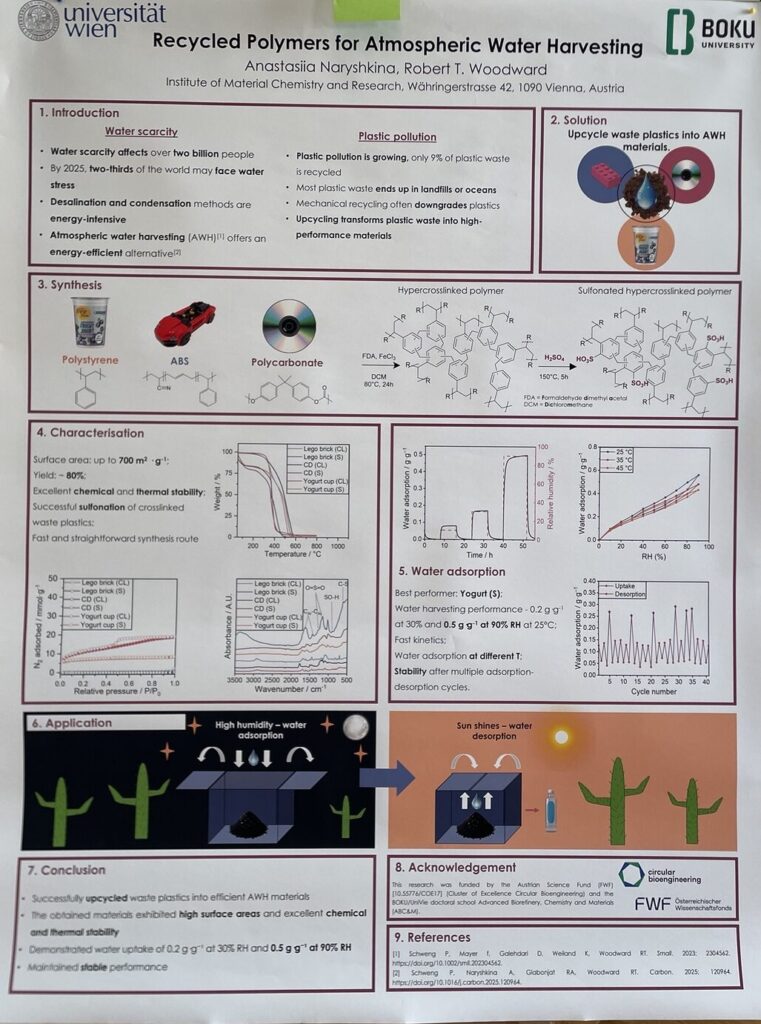
Recycled Polymers for Atmospheric Water Harvesting (significant milestone award)
Anastasiia Naryshkina’s research focuses on turning plastic waste into functional materials that can help address pressing environmental challenges. Instead of treating used plastics as something to be discarded, she converts them into materials which can pull water right out of the air (like sponges!).
By repurposing plastic waste into high-performance materials, her work contributes not only to plastic waste reduction but also to resource generation. It demonstrates how materials can be redesigned to support sustainable technologies, helping to reduce environmental impact while creating practical value. The broader goal is to show how materials chemistry can enable a more circular and resilient approach to both plastics and water resources.
Since winning the award with her poster, Anastasiia has continued improving these materials. She’s testing further types of plastic waste, while focusing on improving their ability to collect water even under realistic humidity conditions. She’s also looking for ways to produce them on a larger scale. They’re planning to publish this work in the near future.
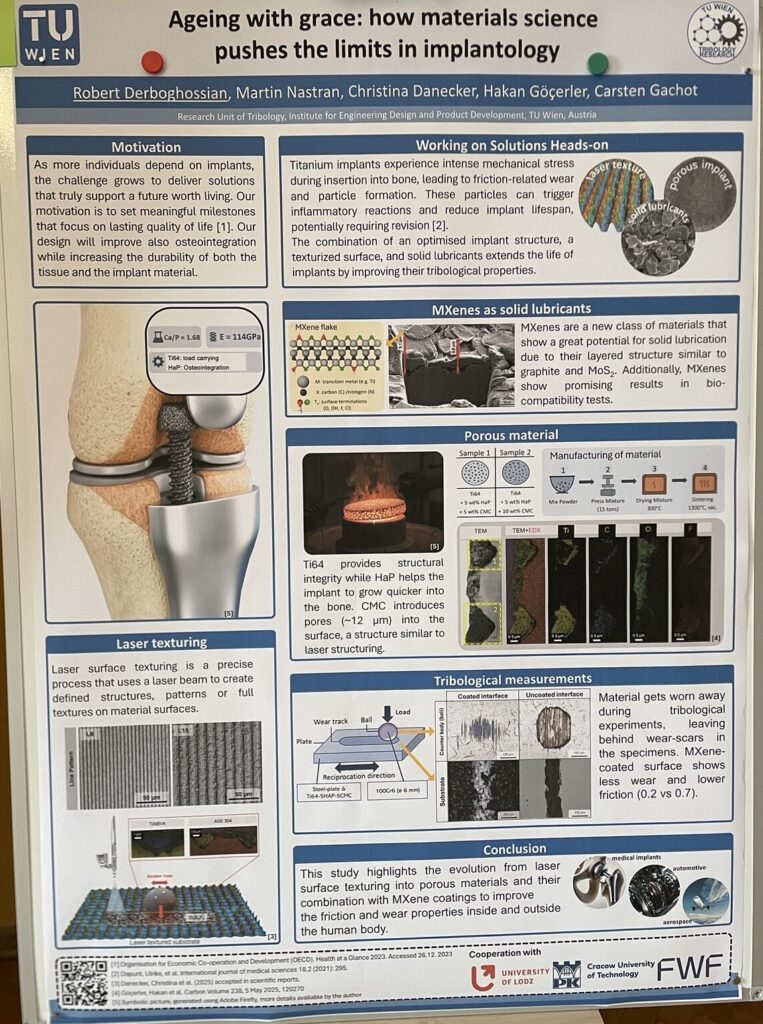
Tribological Innovation for Sustainable Implants with Laser Structuring and 2D Lubricants (fundamental milestone award)
The research group around Robert Derboghossian, Martin Nastran, Christina Danecker, Hakan Göçerler & Carsten Gachot at the Technical University of Vienna studies tribology – how friction, wear, and lubrication work. They focus on MXenes, like Ti3C2Tx, a type of 2D material that performs exceptionally well as a solid lubricant.
Their current research looks for eco-friendly ways to make MXenes, cutting down on harmful chemicals. The team aims to adapt MXenes for different uses, such as biolubricants in living systems or applications in aerospace and high-vacuum environments.
In experiments, they put MXenes onto surfaces and test friction, which means they slide a little sphere over them to see how easily it glides across the surface. The results show that MXenes reduce friction and wear. They’re also working on adding MXenes to polymers (materials made of long molecular chains) to make lubrication last longer.
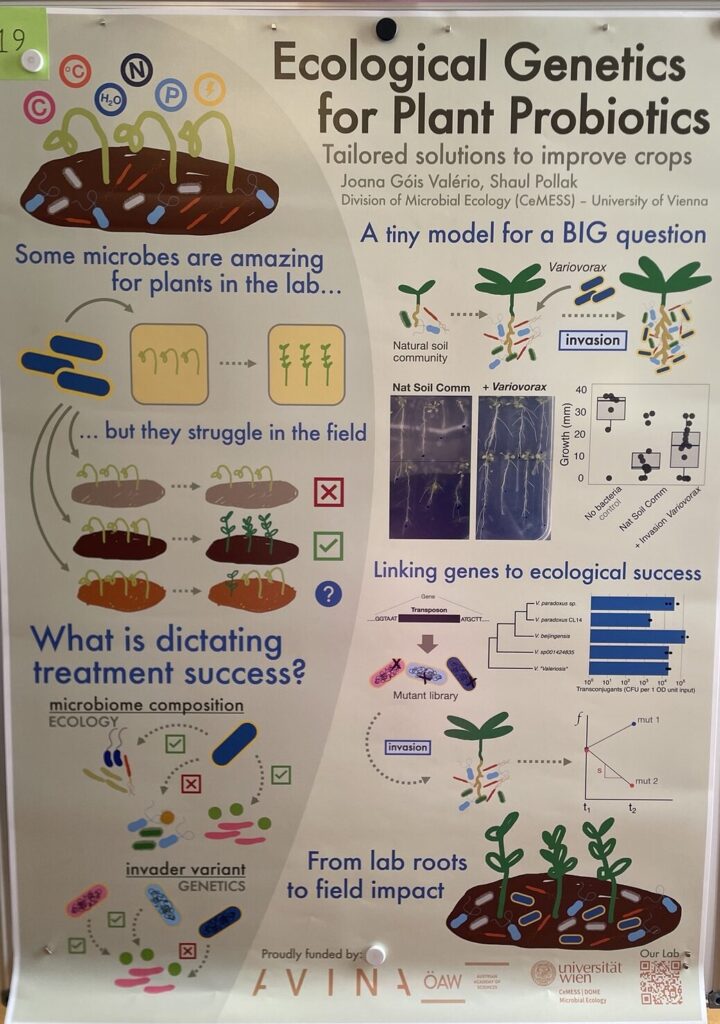
Ecological Genetics for Plant Probiotics (pioneering milestone award)
You know how when someone new joins a group of friends, it either clicks or it’s super awkward? Joana Góis Valério is studying that – but with bacteria. Her PhD looks at how new bacteria manage to join an already well-established bacterial community, like the ones living around plant roots. To figure this out, they built a simplified model for the plant root environment using Arabidopsis, a mix of known root bacteria, and one very special newcomer: a helpful bacterium called Variovorax.
She’s basically playing microbe matchmaker: using genetics and DNA sequencing to find out what makes Variovorax so good at making friends, and who it gets along with the best. The goal is to understand the “rules” that shape diversity in bacterial communities, which could eventually help us design better microbiomes for healthier crops and more sustainable farming.